BLOG / PLANNING
Solar panels on terraced houses and flats: what to know
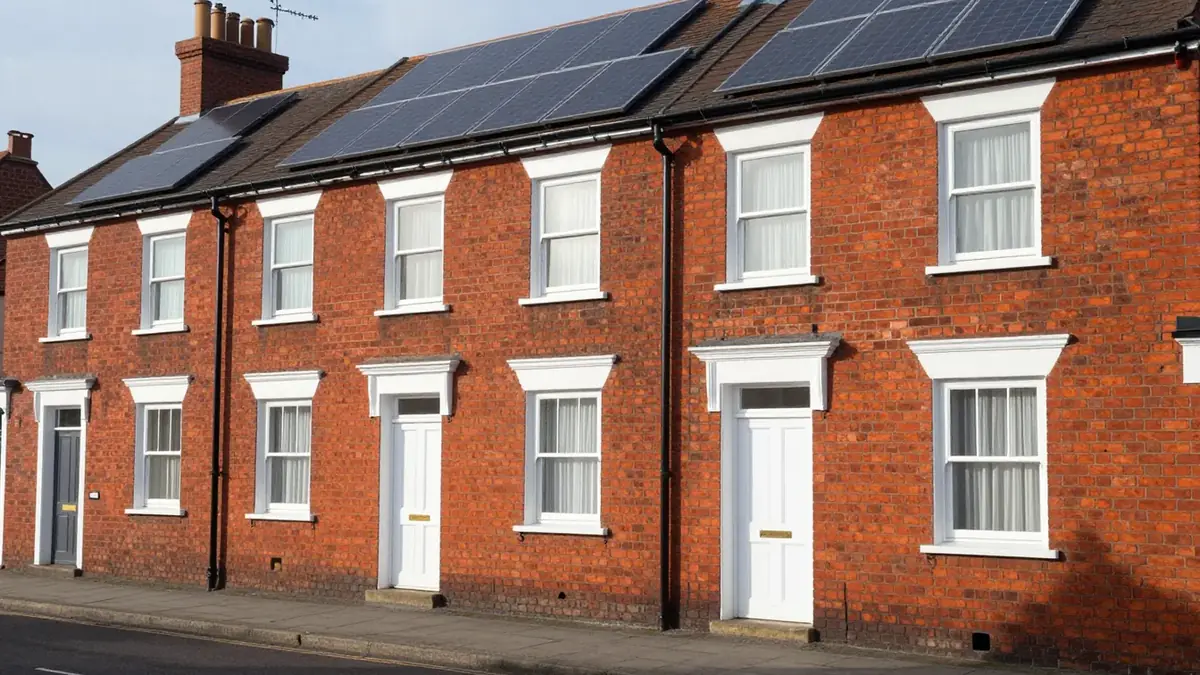
Yes, you can fit solar panels on a terraced house or a flat, but the limits are different. A terrace usually has a small roof, so the system is smaller. A flat adds questions about who owns the roof, because someone else often does. England also changed its planning rules for flats in August 2026.
Terraced houses: space and shade
Most terraces have two roof slopes, one at the front and one at the back. They often face opposite ways. Therefore, a terrace may suit the split layout we cover in east-west facing solar panels.
A small roof limits the number of panels. However, a small system can still cut your bills. Every unit you make at home is a unit you do not buy. The size of the roof sets the cap, not the law.
Shade is the bigger worry. Chimneys, dormers, a taller neighbour or a tree can all fall across a small roof. Therefore, ask your surveyor to map shade through the day.
Check the roof before you plan
MCS rules say the installer must make sure a competent person checks that the roof can carry the load of the system. You can see the clause in the MIS 3002 standard. Older terraces may have light timbers or past repairs, so this check matters because the roof carries the extra weight.
Ask the installer who will do it and what they will report. Also ask what happens if the roof needs work first. Fixing a leak before panels go on is cheaper than after.
Party walls and neighbours
In a terrace you share walls and sometimes roof lines, so solar has a social side. Panels sit on your side of the roof, so you usually do not need your neighbour’s consent just to fit them. Even so, scaffolding may need access, and a friendly word helps.
Ask your installer how they will reach the roof. If they need a neighbour’s space, get that agreed in advance, because it avoids disputes later.
Flats: who owns the roof?
In many blocks, the roof belongs to the freeholder or a management company. As a result, a leaseholder cannot simply put panels on it. You normally need written permission, and your lease sets the rules.
First, read your lease. Then write to the freeholder or managing agent with a clear proposal. Ask for their answer in writing before you pay for a design, because verbal promises can fade.
Shared roofs can work well, although they take time. Residents must agree on cost, ownership of the power and who pays for upkeep. Some blocks fit one system for the whole building. That is a different project from a single flat’s panels, and it needs agreement from residents.
Planning rules for flats in England
Planning is the second hurdle after ownership, and it moves faster than most guides. Treat any older advice with care, because the rules shifted this summer.
England changed its permitted development rules on 27 August 2026. For example, the Planning Portal says the new order split the rules for houses and blocks of flats. Houses gained the potential for larger installations in more places.
For flats, however, the order adds a prior approval step for stand-alone solar. The developer must apply to the local planning authority for a determination before starting. You can read the wording in the amending order.
We do not quote the new size limits here, because the details are easy to misread. Your council can confirm how they apply. Projects that no longer qualify may use the older rules until 26 August 2027. Our guide to planning permission for solar panels covers England, Scotland and Wales.
Plug-in solar for flats
Plug-in solar is now in the planning rules. Although it sounds new, the idea is simple: small panels that connect through a normal wall socket. GOV.UK describes panels under 800W connecting to a domestic mains socket.
For flat dwellers with a balcony or a wall, this may be a way in. However, the planning order blocks it on wooden structures or cladding to cut fire risk. Ask the council and your landlord before you buy anything.
What output to expect
Output depends on place and direction, as a rule. For example, in our PVGIS runs, a 1 kWp south-facing system at 35 degrees makes 1,020 kWh a year in London. It makes 1,014 in Swansea and 896 in Manchester. You can read how solar performs in London, what to expect in Manchester and solar installers serving Swansea.
Terraces often have east or west slopes, so expect less than those figures. However, winter gives even less. Our guide on whether solar panels work in winter shows the monthly pattern.
Upkeep on a tight roof
Terraced roofs sit close to neighbours and trees. As a result, they collect leaves and bird mess, while access can be harder too. Our maintenance and cleaning guide lists simple checks you can do from the ground.
Next steps
A few preparation steps will save you time, whether you own a terrace or lease a flat.
Read about solar panel installation to see what a survey covers. Since terraces vary so much, ask your installer for a layout drawing, a shade report and a yearly estimate.
Still, when you are ready, you can request quotes from MCS-certified installers. We are an independent guide, not an installer, and we contact no one without your consent.
QUESTIONS / ANSWERS
Frequently asked questions
- Can you put solar panels on a terraced house?
- Yes, if the roof is sound and has enough clear space. Terraces often have small roofs, so the system is smaller, and shade from neighbours or chimneys matters. A survey will show what fits.
- Can I fit solar panels on a leasehold flat?
- Usually you need the freeholder's or management company's consent, because the roof and outer walls are often not yours. Read your lease and ask in writing before you pay for a design.
- Do flats need planning permission for solar panels?
- In England, rules for blocks of flats changed on 27 August 2026. Stand-alone solar on flats now has a prior approval step with the local planning authority. Check with the council and the Planning Portal before you start.
- What is plug-in solar?
- Plug-in solar means small panels, under 800W, that connect to a normal mains socket. GOV.UK announced plans to allow them in March 2026. England's August 2026 planning changes also covered them, but not on wooden structures or cladding.