BLOG / PERFORMANCE
Solar panel maintenance and cleaning: a simple UK guide
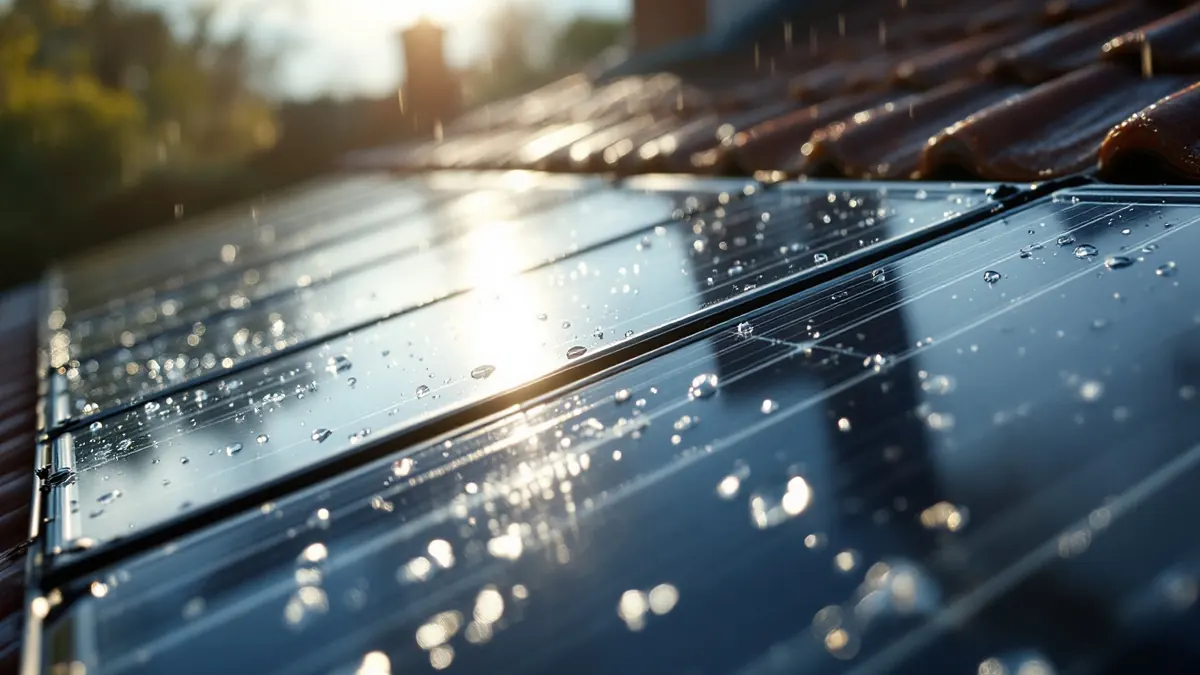
Solar panels need little upkeep, because they have no moving parts. Check your output often, watch for shade and nests, and clean only when monitoring shows a real drop. Rain does most of the work, so never climb onto a roof yourself. Ask your installer what your warranty covers before you hire anyone.
Start with monitoring
The best maintenance tool is the one already on your wall, because it costs nothing. Most systems come with an inverter display or an app that shows what the panels make each day.
Look at it once a week at first, since this builds a baseline. You will soon learn what a normal day looks like for each season. A sudden fall on a bright day is the signal to act.
Compare like with like. A sunny June day and a grey December day will never match. Therefore, compare today with a similar day last week.
Our PVGIS runs show how much the seasons matter. Because winter gives a small share of the year, a low reading in January may be normal. See our guide on whether solar panels work in winter for the monthly pattern.
How much does dirt matter?
PVGIS, the European Commission’s modelling tool, applies a default 14% overall system loss. That figure covers cables, inverters, dirt, snow and ageing, according to the PVGIS user manual. So your installer’s yearly estimate should already allow for normal dirt.
In the UK, regular rain keeps most roofs fairly clean. However, some spots collect more grime. Examples include roofs under trees, near farms or busy roads, and low-pitch roofs where water runs off slowly.
For example, our PVGIS figures for a 1 kWp system give 1,008 kWh a year in Milton Keynes. They give 1,042 in Cardiff and 1,053 in Exeter. A dirty array could cut some of that. You can read how solar performs in Milton Keynes, what to expect in Cardiff and solar installers serving Exeter.
When and how to clean
Most owners do not need to clean, although some roofs need it. If you do clean, follow these rules.
- Check the warranty and the manual first.
- Use plain water and a soft brush on a long pole, from the ground.
- Avoid harsh chemicals, pressure washers and abrasive pads.
- Pick a cool, overcast day, so the glass does not streak.
- Stay off the roof, and do not use a ladder near the array.
If panels are out of reach, hire a trained cleaner. Ask what insurance they carry and what method they use, because a bad clean can scratch glass or loosen cables.
Remember the safety side, because a fall from a roof costs far more than any lost power. Many installers therefore advise against DIY cleaning on a pitched roof.
Bird proofing
Pigeons and gulls can nest under panels. Their droppings dirty the glass, and nests can block airflow or chew cables. Mesh fitted around the edge keeps birds out while leaving air flow.
Ask your installer to fit a guard, or to approve one. Fixings that pierce the frame or press on the cell may harm panels. Because of this, check your warranty before any bird proofing work.
If a nest is in place, check the rules before you remove it, because nesting wild birds can have legal protection. A specialist can advise.
Inspections and warranties
Solar panels have no moving parts, but the system still has parts that wear. The inverter is the main one, and it may need replacing during the life of the panels. Cables, fixings and the roof around them also deserve a look.
Ask for a written warranty that lists the panels, inverter and workmanship. Also ask who to call. However, a warranty only helps if the firm survives. RECC members must insure the workmanship warranties they issue, which protects you if the installer stops trading.
See the RECC page. Our guide to MCS certified solar installers explains how to check an installer and what that protection means.
A professional check every few years can spot loose fixings, damaged cables or roof wear. Treat it as a health check, because small faults cost less to fix early.
Layout and access
How your panels sit changes what they need. For example, east and west slopes can collect dirt differently from a south roof. We explain more in our guide to east-west facing solar panels. Terraces have their own limits on access, which we cover in our post on solar panels on terraced houses and flats.
Ask your installer how the roof will stay reachable, because good access makes any future check safer and cheaper. You can read more about the full job on our page for solar panel installation.
A simple yearly routine
Set a reminder each spring and autumn, since seasons change shade and dirt. Then run through this short list.
- Compare recent output with last year’s, month by month.
- Look at the array from the ground, using binoculars if needed.
- Check for moss, leaves, nests and new shade from tree growth.
- Read any error messages on the inverter.
- Keep your warranty papers and MCS certificate in one place.
If anything looks wrong, call the installer, because faults can be unsafe. Do not open the inverter or touch any wiring yourself.
Still, when you are ready to compare installers and aftercare, you can request quotes from MCS-certified installers. We are an independent guide, not an installer, and we contact no one without your consent.
QUESTIONS / ANSWERS
Frequently asked questions
- Do solar panels need cleaning in the UK?
- Often only rarely. Rain washes most dirt away, and PVGIS already builds a loss for dirt into its estimates. Clean only if monitoring shows a drop that rain and daylight do not explain, and use a safe method.
- How do I know if my solar panels are working?
- Use your inverter display or monitoring app. Compare daily output with similar days in earlier weeks. A sudden fall on a sunny day is the main sign to call your installer.
- Can I clean solar panels myself?
- From the ground, with a long soft brush and plain water, you may be able to. Never climb onto a roof or use a ladder on a slippery surface. For a hard-to-reach array, hire a trained cleaner and check your warranty first.
- Does bird proofing void a solar warranty?
- It can, if the work damages the panels or the fixings. Ask your installer before anyone fits mesh or spikes. Many installers fit a mesh guard themselves, so the work stays within the warranty.