BLOG / RULES AND GRID
G98 vs G99: Connecting Solar Panels to the Grid
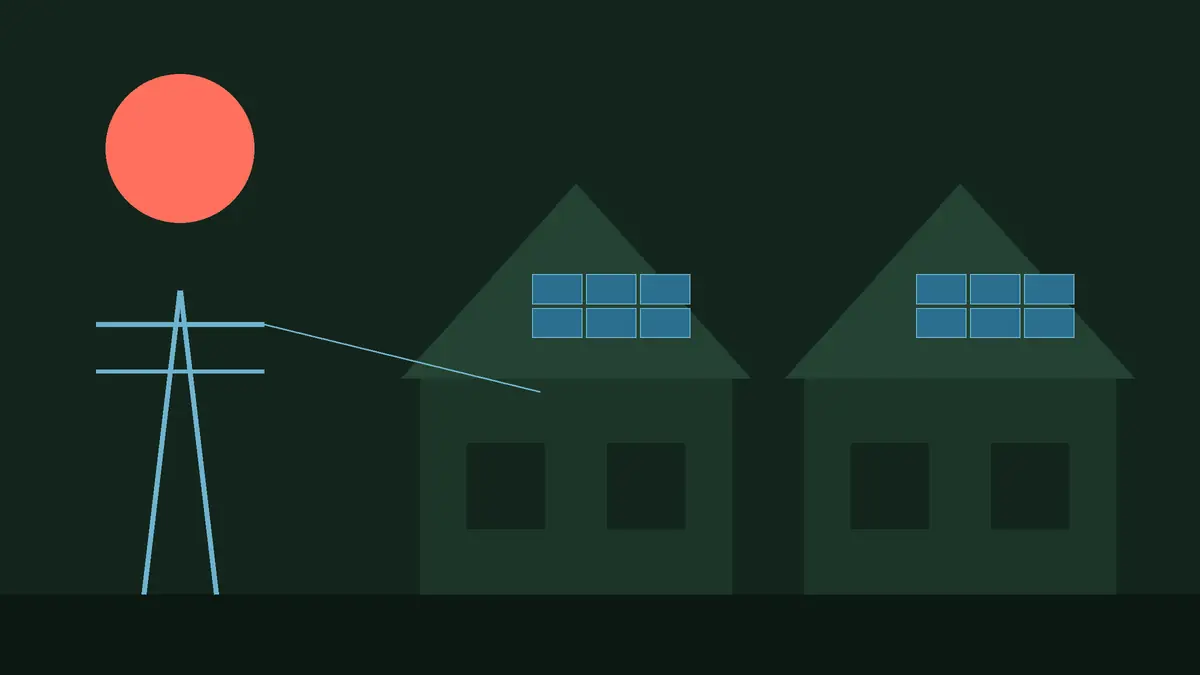
G98 and G99 are the two rules for connecting a generator to the grid. Your total output decides which one applies: up to 16 amps per phase follows G98, and anything above follows G99. Your MCS installer tells your network operator, so you do not file the paperwork yourself.
What G98 and G99 are
Both are Engineering Recommendations from the Energy Networks Association (ENA). They set how small generators connect to the local network. They also set how the local network company hears about it. That company is a distribution network operator, or DNO.
The MCS solar standard (MIS 3002) sets the dividing line. Installations up to and including 16 A per phase follow G98, while those above 16 A follow G99. Most homes have a single phase.
On a single-phase supply at 230 volts, 16 A is about 3.68 kW. We worked that out ourselves from the standard’s figures, so your installer should confirm the exact limit for your supply.
The combined output rule
The 16 A threshold covers the total AC output of every generator at your home. It is not a limit on the panels alone. Solar panels, a battery inverter and any other generator all add up.
For example, MCS gives this case. A 3 kW solar system plus a 3 kW battery on one single-phase supply falls under G99. Each part is small on its own, yet together they pass the line. This surprises many people who add a battery later.
If you may add storage in future, tell your installer now. They can then plan the connection, so you do not repeat the process. Our guide asks are solar batteries worth it and covers sizing.
How G98 works in practice
Under G98, you connect first and then tell the operator. National Grid’s small-scale generation page describes notifying within 28 days of commissioning. People often call this fit and inform.
Your installer does this for you. MIS 3002 says the MCS contractor must notify the DNO under the G98 or G99 procedure. You should still ask for proof that it was done.
Keep the confirmation with your other papers, since you may want proof later. Payments for exported power have their own rules, which our post on the Smart Export Guarantee explains.
How G99 differs
G99 covers larger systems and combined solar-plus-battery setups above the threshold. It has its own process. We could not confirm the exact steps and timings from a primary source, so we do not quote them.
Instead, ask your installer which route applies, when they will apply to the operator, and how long it could take. A clear answer helps you plan, because the install date may depend on it.
Who your network operator is
Great Britain has six DNO groups, and your operator depends on where you live, not on your energy supplier. They are National Grid Electricity Distribution, SP Electricity North West, UK Power Networks, Northern Powergrid, SP Energy Networks and SSEN.
Our town data shows how this plays out in four cities, while the map differs in every region.
- Manchester: SP Electricity North West. See how solar performs in Manchester.
- Leeds: Northern Powergrid. See solar panel installers serving Leeds.
- Birmingham: National Grid Electricity Distribution. See solar panels in Birmingham.
- Southampton: SSEN Distribution. See what to expect from solar in Southampton.
Your installer will identify your operator from your address, so you do not need to guess.
Electrical safety on top
Connection to the grid is separate from electrical safety, however. In England, Part P of the Building Regulations covers roof-mounted panels, and a competent person must certify the work. Your installer arranges that as well. Both certificates belong in your file.
Cost matters here too. Ask the installer to list any grid-connection fees in the quote, because they can differ between jobs. Also check the VAT position, which our post on VAT on solar panels explains.
What to ask your installer
Use this short list at the quote stage.
- Is my job G98 or G99, and why?
- Does the figure include any battery or second inverter?
- Who tells my network operator, and by when?
- Will you give me a copy of the notification?
- Are there any grid-connection fees in the price?
- Could a battery added later change the route?
Clear answers show an installer who knows the process. Vague answers are a reason to look elsewhere.
Sizing with the limit in mind
You may want to size a system to land just under the G98 line. That can make sense, yet it is not always best, because a larger system may suit your roof and use better. Our guide to how many solar panels you need shows how to size from your own use. Our solar output table for 24 UK cities shows what each kilowatt makes.
If storage drives the project, read about solar battery storage. For the whole install, see our page on solar panel installation, since both routes share one survey.
Next steps
A grid connection is a small step in a solar project, yet it is easy to forget. Treat it as part of the quote rather than an extra. That way, nothing surprises you on install day.
Ask each installer to state in the quote whether the job is G98 or G99. Ask who notifies the operator and when. Then check the answers against this guide, because vague replies are a warning sign.
When you are ready, you can request quotes from MCS-certified installers. Your enquiry goes into a central dashboard, because nobody is contacted automatically.
QUESTIONS / ANSWERS
Frequently asked questions
- What is the difference between G98 and G99?
- G98 applies to installations up to and including 16 A per phase. G99 applies above that. The limit counts the total output of all generators, including a battery.
- Do I need to apply to my network operator before installing solar?
- Under G98 your installer notifies the operator after commissioning, within 28 days according to National Grid. For G99, ask your installer how and when they apply.
- Does adding a battery change G98 to G99?
- It can. The 16 A limit covers the aggregate output of every generator, so a 3 kW solar system plus a 3 kW battery on a single-phase supply falls under G99.
- Who tells the network operator about my system?
- Your MCS installer does. The MIS 3002 standard says the contractor must notify the operator under the G98 or G99 procedure.